Code is a means,
not the end.
I help engineers and teams make better technical decisions in production.
Especially now that AI makes code cheaper, faster, and easier to generate.
The challenge isn't writing more — it's deciding well and keeping shared judgment across the team.
¿Prefieres escribirme directamente? hola@emiliocarrion.com

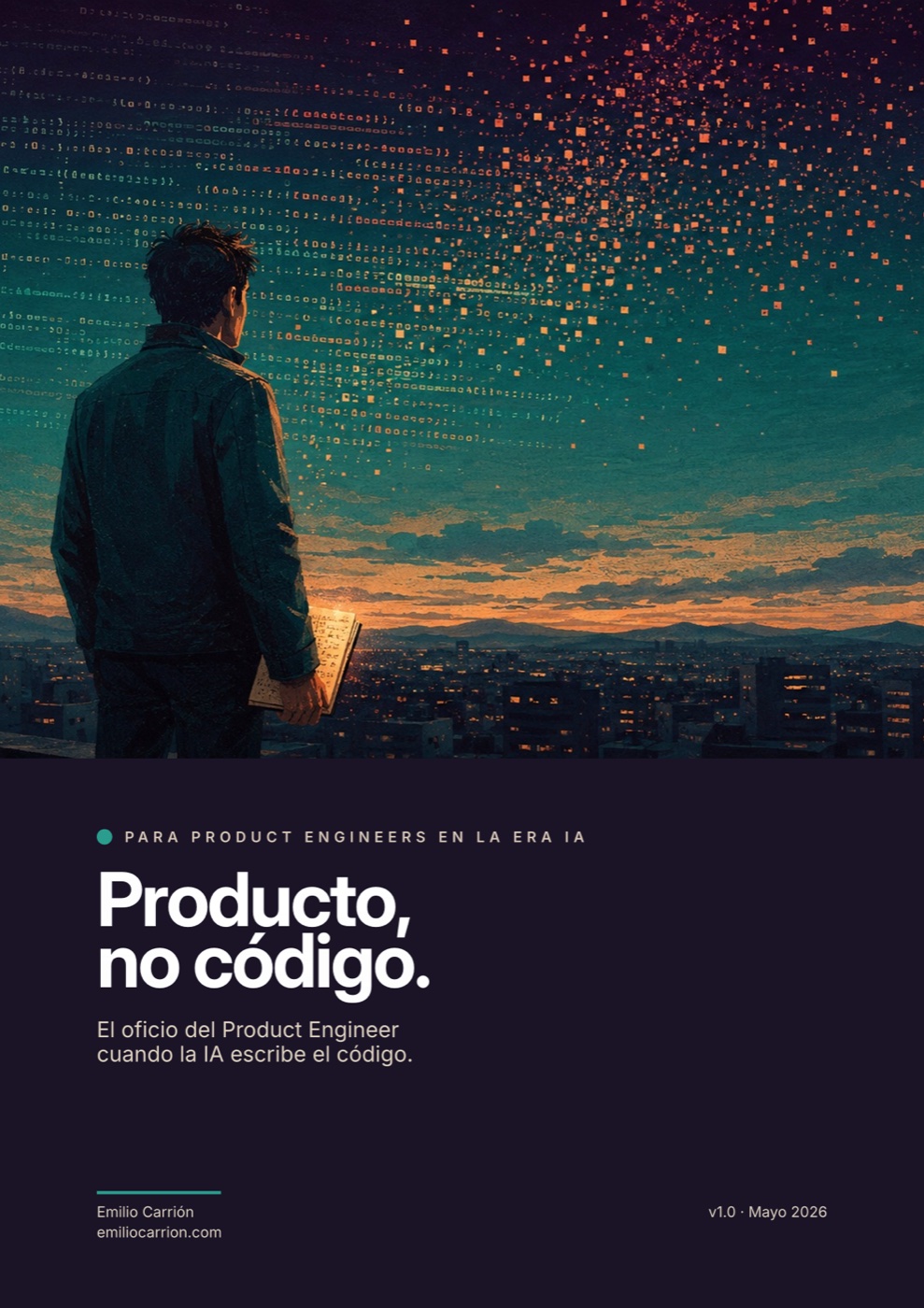
Product, not code
The craft when AI writes the code.
A 37-page guide for Senior and Staff Engineers who use AI every day. Three acts, six dimensions, and printables to use next week.
- Criterion + sustainable code + ownership
- 4 printables
- 3 acts · 6 dimensions of the craft
Anything else? Write to me: hola@emiliocarrion.com
I've spoken at
Conferences and communities where I've shared technical criteria with other senior engineers.
What I fight against
These are the enemies that hold back engineers and teams
Technical purism that paralyzes
The one that tells you that you need the perfect architecture before writing a single line of code. The one that turns every technical decision into a three-week philosophical debate.
Over-engineering that adds no value
Microservices for an MVP. Kafka for 100 users. Seven-layer abstractions for a CRUD. The complexity that impresses at conferences but sinks teams in production.
The "that's not my job" mentality
The developer who hides behind code and refuses to understand the business. The one who believes their responsibility ends when the PR is approved.
Managers who turn engineers into feature factories
Those who turn talented engineers into feature factories. Those who measure productivity in lines of code and closed tickets.
I help engineering teams build software that lasts.
I'm a Staff Engineer at Mercadona Tech: I build systems at real scale in physical retail. I combine this with a PhD at UPV on software production methods. Outside of work I write for thousands of senior engineers, give talks, and selectively collaborate with technical leaders and Product Engineers who are redefining their craft now that AI writes the code.
Staff Engineer
Building architecture and systems at real scale in physical retail, serving millions of customers.
Research
Software Engineering Methodologies
Researching how great software is built and maintained
International Speaker
Software Engineering Conferences
Sharing knowledge about software design and team leadership
The truths nobody tells you
What I've learned building real-scale systems
The best code doesn't need a translator
If your code requires a 200-page manual to understand, you've failed. Clarity is not optional: it's what separates code that evolves from code that gets rewritten. A team that understands the code is a team that delivers with confidence.
Product-oriented seniors fix systems, not just bugs
Anyone can put out a fire. Senior engineers redesign the system so that fire never happens again. They don't obsess over isolated features: they think about complete flows, sustainability, and long-term impact.
Most "technical debt" is Criteria Debt.
Decisions nobody named. Reviews approved without understanding. Context living in one person's head. Diffuse ownership. Code is just the symptom; the bottleneck is criteria.
Software in production is the only useful truth
Perfect diagrams and six-month plans don't survive contact with real users. I prefer shipping and learning over planning indefinitely. Resilient systems grow with short cycles and reversible decisions.
If change is scary, the problem is the design
When modifying the system requires three weeks of planning and a prayer, something is wrong. Good software is built to evolve. Change shouldn't be a threat: it should be part of everyday life.
Learn to think about product, not just code
No React tutorials. Strategy, product vision, and soft skills for tough engineers.
Every week I share practical ideas about architecture, system design, and technical leadership.
Latest reflections
View allLetting go of the wheel
Uncle Bob says he no longer reads the code his agents write. The debate that followed mixes four separate questions: what part of review can be automated, where the judgment behind it comes from, how much your system forgives, and what Bob is actually doing.
Don't Choose Your Global Database From a Diagram
Having users on two continents doesn't mean you need a globally consistent database. Before choosing between Spanner, DynamoDB or Aurora, the real question is a different one: what data are you missing to decide well?
Operating AI is easy. Directing it is the craft.
When everyone uses AI every day, mastering the tool stops being a differentiator. What matters is the stance you take toward it: operating or directing. And no agent puts its name on the line for you.
Tools for senior engineers
These aren't tutorials. They're practical tools that solve real communication, documentation, and technical strategy problems.
Want your team to think differently?
I run private workshops for engineering teams that want to improve technical decision-making, AI-assisted review, and shared engineering judgment. No generic AI training. No prompt tricks. Practical work on how teams build, review, and operate software in production.
¿Prefieres escribirme? hola@emiliocarrion.com